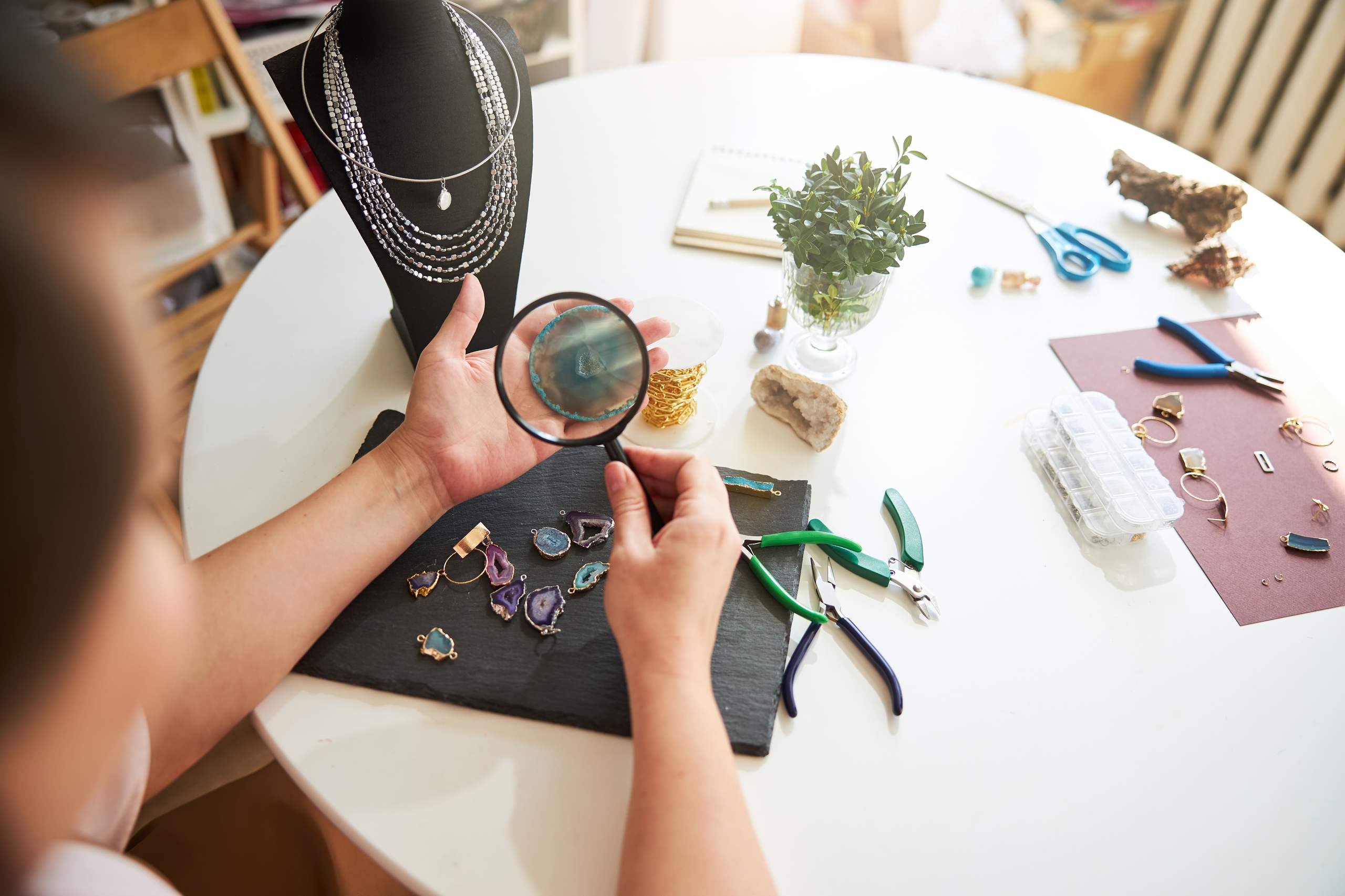
A well-designed accessory should not only be visually appealing but also functional, suitable for the intended user, and expressive of the design concept.
Finding the right balance between aesthetics and functionality can be difficult, particularly if you have a specific shape or embellishment in mind. But with the right approach, you can find ways to make your designs stand out while ensuring they are practical.
Identify the Function of the Accessory
First, think about the purpose of your accessory.
If you’re designing a bag, think about what it will carry. If it’s a belt, think about whether it needs to support a certain type of clothing. For jewelry, think about how heavy it will be and how comfortable it will feel.
Ask Key Questions
Some questions to ask yourself:
- Who is the target audience for the accessory?
- When and where will the accessory be used?
- What will the accessory carry, support, protect, or allow the wearer to access?
- How often will the accessory be handled?
- What aspects of the accessory could be annoying or inconvenient?
You might find answers to these questions that inform your aesthetic decisions.
Determine the Target Audience
Rather than thinking of an accessory being designed for everyone, narrow down your ideal user.
This can help you determine the correct size, material, color, closure, and overall proportion for the accessory.
Research Typical Behavior
Think about how your target user will typically use the accessory on a daily basis.
What kind of things will they put in the accessory? Where will they store the accessory when not using it? Will the accessory need to be easily accessible, or will the wearer prefer a secure closure? Will they want lightweight or heavy materials?
By identifying common behaviors, you can find areas for innovation.
Merge Functionality With Aesthetics
Just because a design is functional doesn’t mean it has to look mundane.
Often, a feature can serve as an opportunity to highlight an aspect of the design.
For example, the closure could become a major detail of the accessory, the pocket could alter the overall shape of the piece, or the strap could become a significant element.
Highlight the Practical Details
Rather than obscuring the practical features of the accessory, focus on how it will integrate into the design.
Making sure functionality and aesthetics work together can lead to a much more cohesive design.
Select Appropriate Materials
The material choice will determine both the look and the performance of the accessory.
If you choose a fabric with a beautiful texture, it might be perfect for the design, but it might not be durable enough for everyday use. Conversely, if you choose a very durable material, it might solve the practical problem, but might not fit the design concept.
Think Long-Term
Consider how the material will perform:
- During production
- In everyday use
- Under stress
- After cleaning
- Over time
The right material will complement the design throughout its lifecycle.
Focus on Proportions
The proportions of an accessory will determine how it fits and looks. A large handbag might look good, but if it’s too big, it could be hard to carry when it’s full. A small accessory might look great, but it might not have enough space for what it needs to hold.
Try out Different Options
Try making a few different versions of the same design.
Try changing the width, the height, the strap length, the size of the pockets, or the placement of the closure. It’s often easier to compare two different options than to try to get everything perfect in the first draft.
Consider How It’s Used
Most accessories involve some kind of repeated action.
When you’re designing an accessory, think about how someone will open a bag, put on a bracelet, adjust a belt, or carry something.
Make It Easy to Use
How many actions does someone need to take to use the accessory?
Could the closure be easier to reach? Could the strap be adjusted more easily? Could the accessory be opened with just one hand?
These things might seem minor, but they can really affect how the accessory feels to use.
Prototype Before Finalizing
A drawing can show an idea, but a prototype can show problems that are hard to see in a drawing.
You don’t always need to make a prototype out of the final materials.
Make Rough Models
Rough models made of cardboard, paper, fabric scraps, foam, or other inexpensive materials can help you check:
- Size
- Shape
- Volume
- How it moves
- Where things are placed
A rough model can save a lot of time before you decide on the final materials.
Remove What You Can
After you’ve figured out the main idea of the accessory, look at all the details.
Does every part of the accessory serve a purpose?
Is there more than one part that does the same thing? Could one of those parts be removed?
Sometimes Less Is More
Removing extra details can make the accessory easier to use and look better.
A simpler accessory can also make the main idea easier to understand.
Think About Durability
Function isn’t just about how well an accessory works today. It’s also about how long it will work.
Pay attention to places where things will be stressed, like seams, closures, handles, hinges, and areas that will move a lot.
Design for Repeated Use
Even a beautiful accessory won’t last long if it’s not built for how it will be used.
Think about where pressure and rubbing will happen, and choose how to build the accessory based on that.
Summary
The best accessory designs are ones that are both good-looking and functional.
Focus on the person using it, figure out what it needs to do, choose materials carefully, test different sizes, and make some simple models before deciding on the final design.
A functional accessory doesn’t have to be boring. When the functional parts are part of the overall look of the accessory, they can be some of the most interesting parts of the design.
At AccessCanvas, we believe that functionality is not a barrier to creativity, it’s another creative tool that can help you turn a cool-looking idea into an accessory people want to actually use.