When designing an accessory, most people focus on the shape and the color, but materials are equally important. Choosing the right material can change how an accessory looks, feels, functions, and even how it is perceived emotionally.
When choosing materials, we need to think about how they contribute to our design, how they enhance the visual impact, and how they support the functionality of the accessory.
How Does Material Affect Our Design?
If we imagine creating the same bag in soft fabric, hard leather, clear plastic, or wicker, we will get four totally different designs. Even though the shapes are similar, the designs will look completely different because of the material used.
Material affects how an accessory:
- Looks and feels
- Holds its form
- Functions
- Ages
- Supports its purpose
This is why material choice is an important aspect of the design process. We must consider materials from the start, not at the end of the project.
Getting to Know the Material
All materials have unique properties. Some are flexible, some are stiff; some are smooth, some have a texture. When you choose a material, consider the weight, flexibility, texture, finish, durability, and appearance.
These factors are important because they tell us if the material supports the design concept or if it creates a new interpretation. For instance, a minimalist design might work better with a smooth material, while a bold design might need contrasting textures or unusual finishes.
Texture Adds Visual Interest
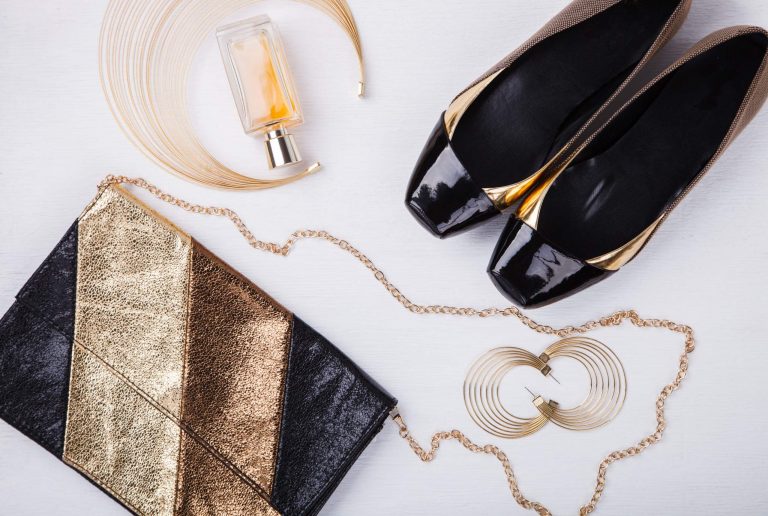
Texture can add interest to a simple design. Combining different textures (for example, a matte surface and a shiny one, or a soft material and a hard one) can give a design more visual impact. This can be very useful when working with a neutral color palette because we can use texture instead of color to create contrast.
Try Mixing Textures
Do not use just one material. Try mixing different textures to create an interesting effect.
For example:
- Soft textile + structured parts
- Smooth surfaces + textured details
- Matte materials + shiny finishes
- Natural materials + artificial materials
Each material should have a specific role and purpose within the design.
Think About the Function of the Accessory
Not all materials are suitable for every type of accessory. An accessory is meant to be used, so we must consider the functionality of the material.
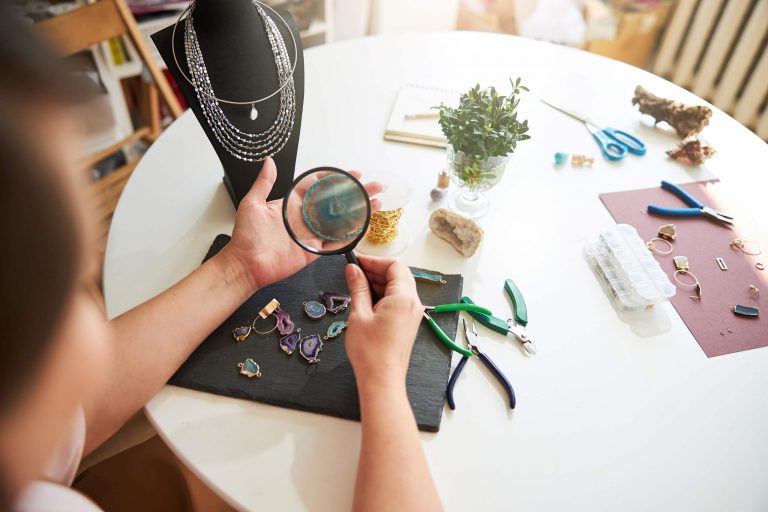
For example, a material used for a bag that is carried daily needs to be durable and resistant to abrasion. A material used for a piece of jewelry may need to be lightweight and hypoallergenic. Always keep in mind what the accessory is used for, and how the material affects that use.
Make Your Materials Support Your Concept
The best materials are those that enhance the concept. For example, a nature-inspired design might use natural textures or materials that look organic. A futuristic design might use smooth surfaces, shiny finishes, or modern synthetic materials. In both cases, the material reinforces the overall design vision.
The goal is to create harmony between concept, form, color, and material.
Experiment First
You do not need to find the perfect material right away. Start by collecting samples, comparing them, taking photos of combinations, and experimenting. Sometimes it is hard to judge the suitability of a material from a digital image. Seeing different materials side-by-side can help us decide which ones complement the design best.
Final Thoughts
Materials are not just about covering the final product; they are an essential part of the design itself. Learning how materials work and how they affect the final product can help us make better design decisions, and create accessories that are visually compelling, functional, and cohesive.
The most suitable material is not necessarily the most expensive one, but the one that makes the design make the most sense.